Water Distribution in Private Gardens

Irrigation systems provide controlled water distribution throughout the garden, supporting plant health and reducing the manual effort required for regular watering. The design of these systems considers the specific water requirements of different planting areas, the garden's layout, and the available water supply.

System Planning

Planning begins with an assessment of the garden's water needs. Different areas may require different approaches: lawns benefit from overhead sprinkler coverage, while borders and containers may need more targeted drip irrigation. The system design maps these requirements onto the physical layout of the garden, routing water lines to reach all necessary areas while minimising disruption to existing features.

Component Selection

The selection of irrigation components depends on the system type and the specific conditions of the installation. Pipes, emitters, sprinkler heads, and control valves are chosen to match the water flow requirements and the garden's environment. Materials must be suitable for outdoor use and compatible with the local water supply characteristics.

Control Systems

Control systems manage when and how much water is delivered to different zones within the garden. These may be simple manual valves or more complex timer-based controllers that adjust watering schedules according to seasonal needs. The placement of control points considers both functionality and visual integration with the garden setting.

System Types

Drip Irrigation

Drip systems deliver water directly to plant root zones through a network of flexible tubing and emitters. Water is released slowly and precisely, reducing evaporation and ensuring efficient use. This method is particularly suitable for borders, raised beds, and container plantings where targeted watering is beneficial.

The system layout follows planting patterns, with emitters positioned near individual plants or groups. Flow rates can be adjusted to match the water needs of different plant types, allowing for precise control over moisture levels in each area.

Sprinkler Systems

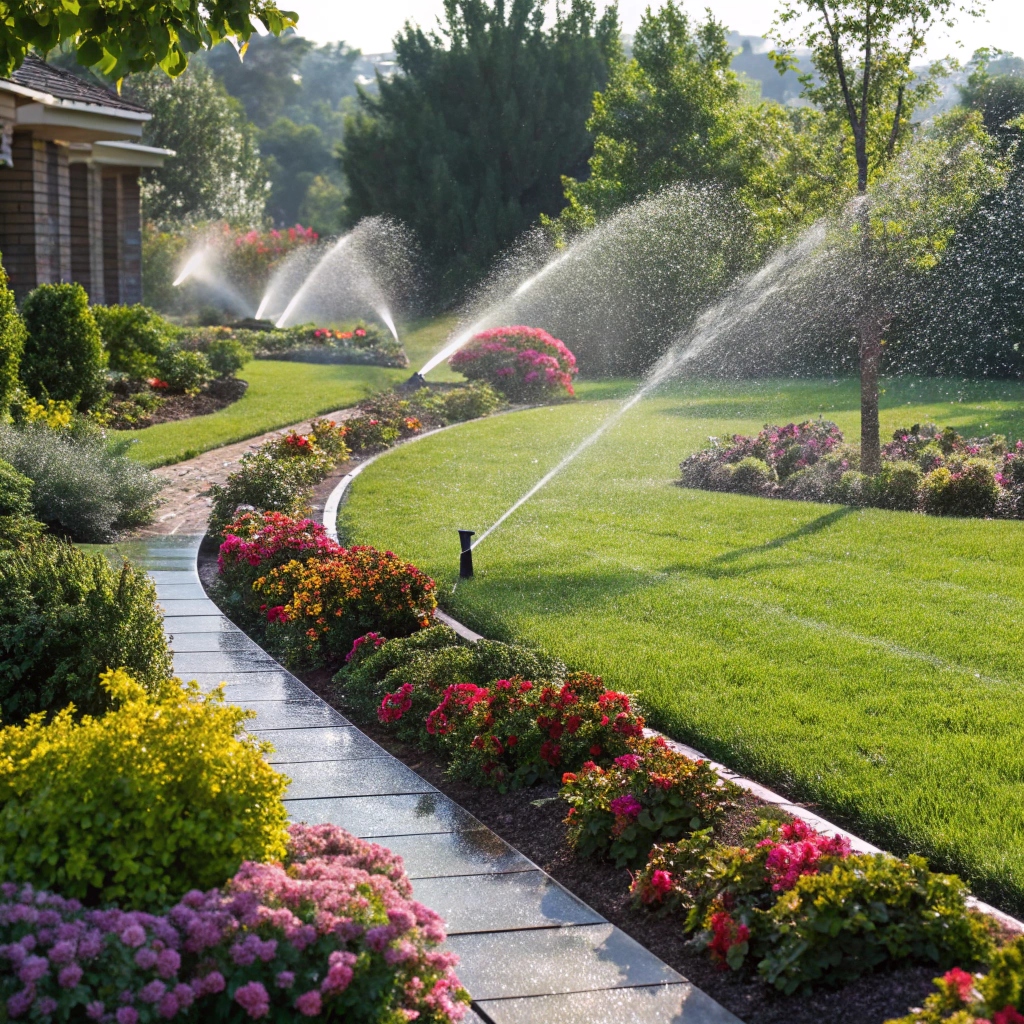
Sprinkler systems distribute water across larger areas through overhead spray patterns. These are commonly used for lawns and open planting areas where uniform coverage is desired. The layout considers the shape of the area, any obstacles that might affect water distribution, and the need to avoid overspray onto paths or adjacent areas.

Sprinkler heads are positioned to create overlapping coverage patterns, ensuring even water distribution. The selection of head types and spray patterns is matched to the area's shape and size, with adjustments made to account for wind conditions and water pressure variations.

Soaker Hoses

Soaker hoses provide a simple method for delivering water along linear planting areas. Water seeps through the hose material along its length, creating a continuous zone of moisture. This approach is suitable for borders and rows of planting where a uniform moisture level is desired.

The hoses are laid along the planting area, either on the surface or slightly buried beneath mulch. Water pressure and hose length determine the rate of water delivery, with adjustments made to ensure adequate coverage without excessive water use.

Zone Configuration

Larger gardens may be divided into multiple irrigation zones, each with its own control valve and watering schedule. This allows different areas to receive water according to their specific needs and use patterns. Zones may be defined by plant type, sun exposure, or simply by the practical limits of water pressure and flow capacity.

Zone planning considers the water requirements of each area, scheduling watering times to avoid conflicts and ensure adequate water pressure throughout the system. Control systems manage these zones independently, allowing for flexible adjustment as garden conditions change.
Installation Considerations

Irrigation installation requires careful routing of water lines through the garden, avoiding disruption to established planting and hard landscaping. Trenches are dug to appropriate depths, considering factors such as frost protection and the need to avoid damage from garden maintenance activities.

Water Supply Connection

The connection to the main water supply must be made in accordance with local regulations and water authority requirements. Pressure regulation and backflow prevention devices are installed to protect the water supply and ensure system operation within safe parameters.

Maintenance Access

System components are positioned to allow for future maintenance and adjustment. Control valves, filters, and other serviceable components are placed in accessible locations while remaining unobtrusive within the garden setting. Clear documentation of the system layout supports ongoing maintenance and any future modifications.

Irrigation system installation

Precise Water Delivery

Targeted irrigation ensures water reaches where it's needed most, supporting healthy plant growth while minimising waste.

System Benefits

💧

Consistent Watering

Automated systems provide regular, consistent watering that supports plant health. Schedules can be adjusted to match seasonal needs and plant growth stages.

Time Efficiency

Automated irrigation reduces the time required for manual watering, allowing more time to enjoy the garden while ensuring plants receive adequate water.

🎯

Precise Control

Zone-based systems allow different areas to receive water according to their specific needs, ensuring optimal conditions for diverse planting.

System Maintenance

Regular Checks

Periodic inspection of components ensures systems continue to operate effectively. Emitters, sprinkler heads, and valves are checked for proper function and positioning.

Seasonal Preparation

Systems are prepared for winter by draining water lines to prevent freezing damage. Spring recommissioning ensures all components are ready for the growing season.

Schedule Updates

Watering schedules are adjusted throughout the year to match changing plant needs and weather conditions, ensuring efficient water use.